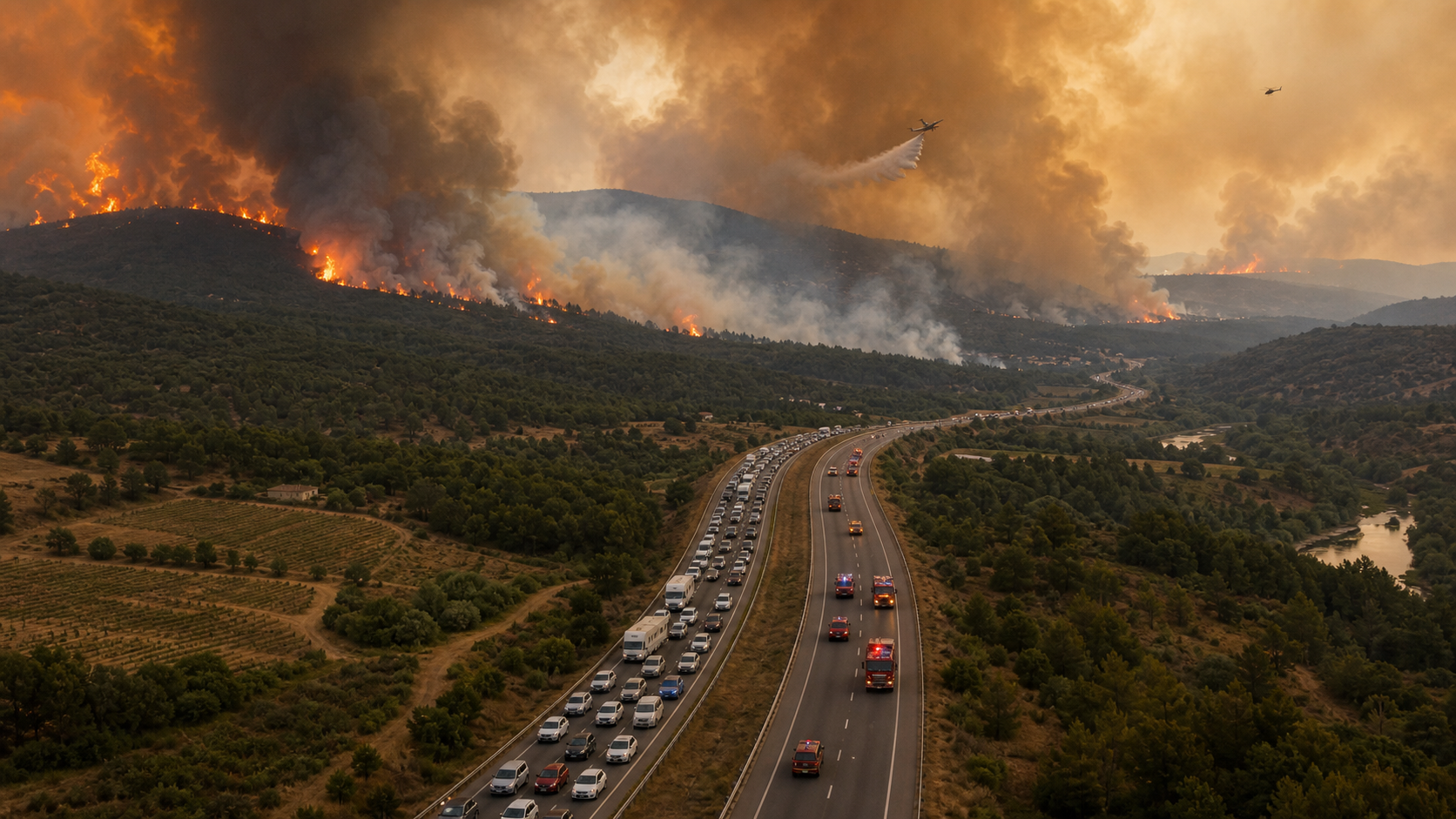
More than 250,000 residents and visitors have been forced to leave areas of France and Spain as fast-moving wildfires expand under dangerous heat, dry vegetation and strong winds. The emergency intensified Saturday, July 25, with fires threatening communities near Bordeaux and continuing across central Spain, according to reporting from the Associated Press and updates from local authorities.
The combined figure includes about 197,000 evacuations in France and roughly 70,000 in Spain. Evacuation totals can change as orders expand, residents return or authorities revise their counts. The number describes people displaced or instructed to leave—not confirmed casualties—and should not be confused with the number of homes destroyed.
France moves resources toward the fire
In southwestern France, major fire fronts pushed toward populated areas around the Bordeaux wine region and Atlantic holiday communities. Thick smoke reduced air quality and visibility while crowded roads complicated evacuations. France mobilized soldiers, firefighters, aircraft and emergency vehicles, and authorities prepared large quantities of protective masks for residents affected by smoke.
The crisis also changed one of the country’s largest sporting events. Officials shortened the final stage of the Tour de France so police and other public-safety personnel could be redirected to wildfire operations. That decision illustrates the scale of the response: staff normally assigned to manage crowds and roads for an international event were needed for evacuation routes and fire control.
People in affected departments should follow prefecture and municipal instructions rather than maps circulating on social media. A road that appears open can close rapidly when wind shifts, smoke thickens or emergency crews need access.
Spain declares a national emergency
Central Spain has also experienced large evacuations as separate fires spread through dry landscapes. Authorities declared a national emergency, allowing coordination of additional resources. Smoke reached Madrid and prompted health warnings, while extreme conditions complicated containment work.
The fires are not one continuous wall of flame across both countries. They are multiple incidents with different local conditions, response teams and evacuation zones. Combining them explains the regional scale, but travelers and residents need location-specific instructions.
Why heat, wind and drought make fires harder to stop
Wildfire behavior depends on fuel, terrain and weather. Prolonged heat dries grasses, shrubs and forest litter, allowing sparks to become moving fronts more easily. Wind supplies oxygen, carries embers across roads and firebreaks, and can change direction faster than crews can reposition. Steep or inaccessible terrain slows ground operations.
Climate change does not ignite every individual fire, and investigators must determine specific causes. However, hotter conditions and more frequent or intense heat extremes can lengthen periods when landscapes are capable of sustaining severe fires. Land management, development patterns and ignition prevention also affect losses.
What residents and travelers should do
Anyone under an evacuation order should leave promptly using the route specified by authorities. Delaying until flames are visible can create traffic jams and expose people to smoke. Travelers should check official regional alerts, rail and highway operators, airline notices and accommodation providers before approaching affected areas.
Smoke can travel far beyond the fire perimeter. Fine particles may aggravate asthma and heart or lung disease. People should close windows when advised, reduce strenuous outdoor activity, use properly fitted high-filtration masks if authorities recommend them and seek medical help for severe breathing difficulty, chest pain or confusion.
Before leaving, residents should take identification, medication, water, chargers, essential documents and supplies for children or pets if time permits. They should not return until authorities lift the order. Drones should never be flown near fires because they can force water-dropping aircraft to suspend operations.
What remains uncertain
Saturday’s situation is still developing. Evacuation totals, acreage burned, road closures and containment estimates may change. Early figures from separate agencies can also overlap. Solvex News will treat official emergency services as the authority for operational instructions and will update confirmed totals rather than presenting projections as facts.
Sources and method: Solvex News reviewed the Associated Press report published July 25 and cross-checked the developing regional picture against public emergency information described by authorities. The accompanying image is an AI-generated editorial illustration, not a photograph of a specific fire location.