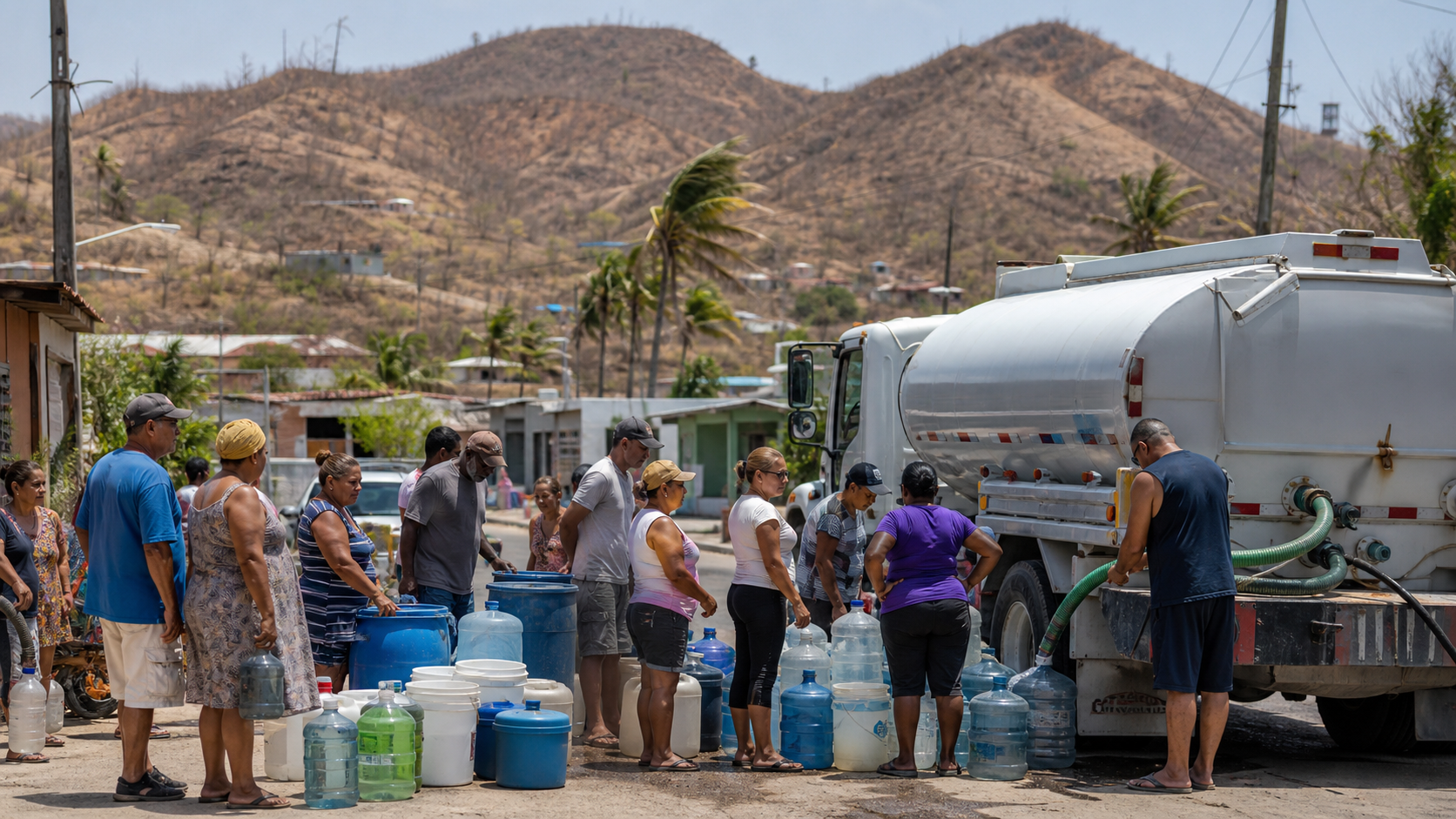
Puerto Rico’s drought emergency has brought scheduled water-service interruptions to affected communities, with the government extending emergency measures to Río Grande, Canóvanas and any other area affected by the rationing plan.
Officials attribute the immediate problem to significantly reduced flows feeding the Guzmán Arriba filtration plant. The emergency order authorizes government coordination and National Guard support for the Puerto Rico Aqueduct and Sewer Authority’s response.
Check the schedule, not social-media rumors
Rationing schedules can change with reservoir levels, rainfall and system operations. Residents should consult official PRASA channels and municipal announcements for their sector. A schedule shared by a friend may apply to another service zone or an earlier date.
Store water safely
Use clean, food-grade containers with tight covers and keep them away from chemicals, direct sun and dirty surfaces. Do not drink water from decorative, swimming or previously chemical-filled containers. Follow Puerto Rico Health Department instructions when officials issue boil-water or disinfection guidance.
People should avoid opening sealed emergency supplies until needed and rotate stored water according to public-health recommendations. Anyone with a medical condition requiring reliable water should contact their provider and local emergency services before the supply stops.
Conservation without unsafe shortcuts
Shorter showers, repairing leaks and postponing nonessential outdoor washing can reduce demand. Safe hygiene, food preparation and prescribed medical needs remain priorities. Never mix cleaning chemicals to compensate for limited water.
Sources and method: Solvex News reviewed Puerto Rico Executive Order 2026-032, the government’s interagency drought announcement and Health Department water-safety guidance. Readers should use current PRASA notices for exact schedules. The image is an AI-generated editorial illustration.