The United States has recorded 2,318 measles cases in 2026, surpassing the entire 2025 total with five months still remaining, according to a Centers for Disease Control and Prevention update reported Friday. The tally makes 2026 the country’s worst measles year since 1991 and renews concern about falling vaccination coverage and continued community transmission.
The CDC counted 2,289 cases in 2025, itself the highest total in more than three decades. Major 2026 outbreaks in South Carolina, Utah and Arizona account for hundreds of infections, while smaller clusters have appeared elsewhere. Because public-health reporting can lag and some infections are never tested, the confirmed total may not represent every case.
Why measles spreads so quickly
Measles is one of the world’s most contagious diseases. The virus travels through the air when an infected person coughs or sneezes and can remain in an indoor space after that person leaves. In communities with low immunity, one case can create a large chain of transmission.
Symptoms usually begin with fever, cough, runny nose and red or watery eyes, followed by a rash. Complications can include pneumonia, brain swelling and death. Infants, pregnant people and those with weakened immune systems can face greater risk, although severe illness can occur in previously healthy people as well.
Vaccination coverage has fallen
National measles, mumps and rubella vaccination coverage among kindergartners fell from 95.2% in the 2019-20 school year to 92.5% in 2024-25, AP reported. National averages can conceal communities with much lower coverage, where outbreaks find enough susceptible people to keep spreading.
The two-dose MMR series is the main preventive tool. People uncertain about their own or their child’s vaccination history should contact a healthcare professional or local health department rather than relying on social-media advice. Recommendations can differ by age, travel, immune status and outbreak exposure.
Could the U.S. lose elimination status?
The United States declared measles eliminated in 2000, meaning continuous domestic transmission had been stopped; it did not mean imported cases would never occur. International health officials are expected to review whether the U.S. and Mexico have maintained that status. Losing it would signal that transmission continued long enough to become reestablished.
Health authorities define an outbreak as three or more linked cases. Researchers studying earlier outbreaks believe official counts can miss infections when surveillance is limited or household contacts cannot be fully traced.
What to do after a possible exposure
A person who believes they were exposed should call a clinic or health department before arriving in person. Advance notice allows staff to prevent exposing other patients in waiting rooms. Anyone with emergency symptoms such as severe breathing difficulty, unusual sleepiness, confusion or dehydration should seek urgent medical care.
This article provides general public-health information, not an individual diagnosis. Case totals and affected locations change, so readers should use the latest CDC and state health-department information.
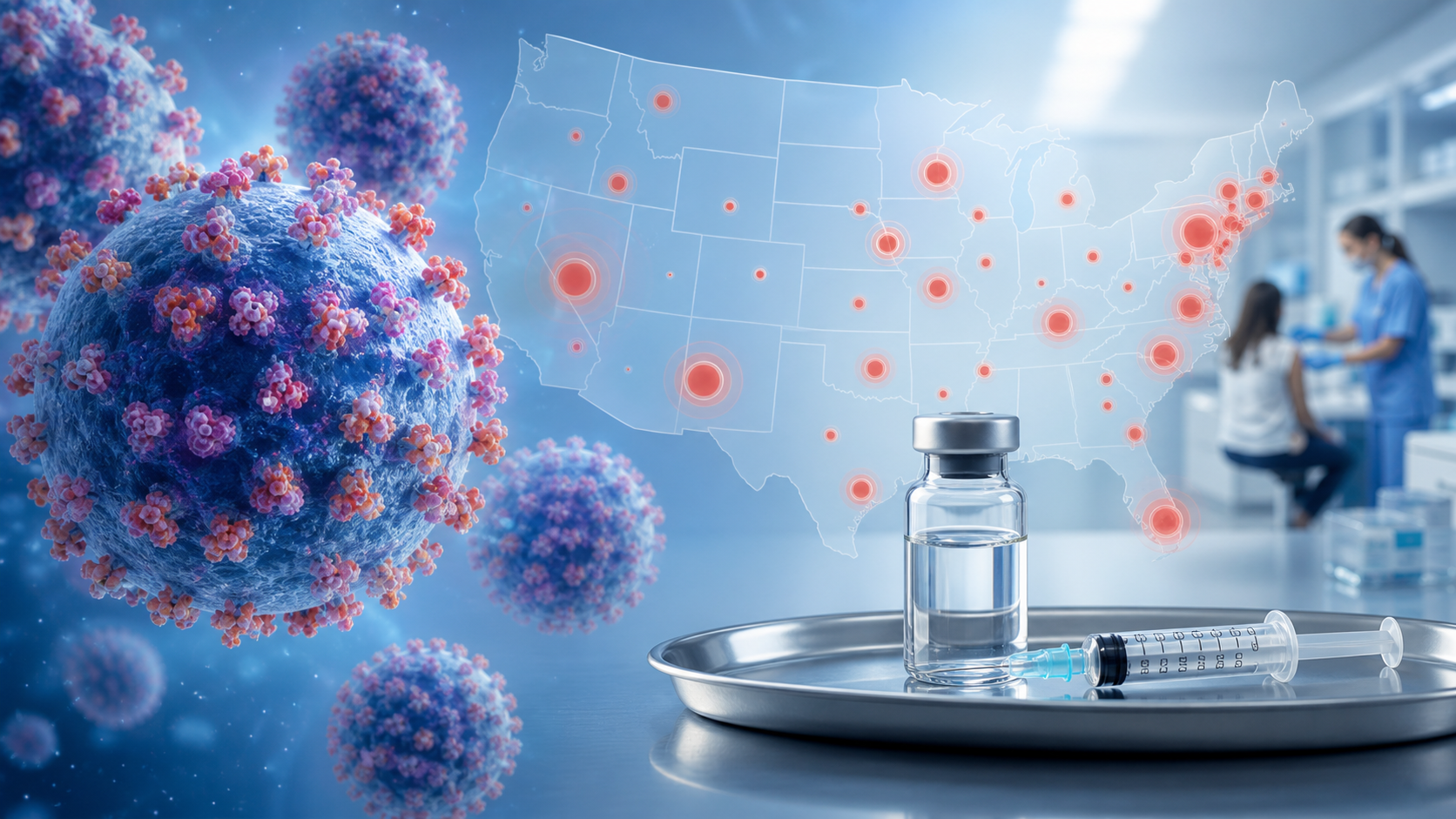
Sources and method: Solvex News reviewed CDC case information and Associated Press reporting published July 24. The map elements in the accompanying AI-generated illustration are conceptual and do not represent current county- or state-level case counts.