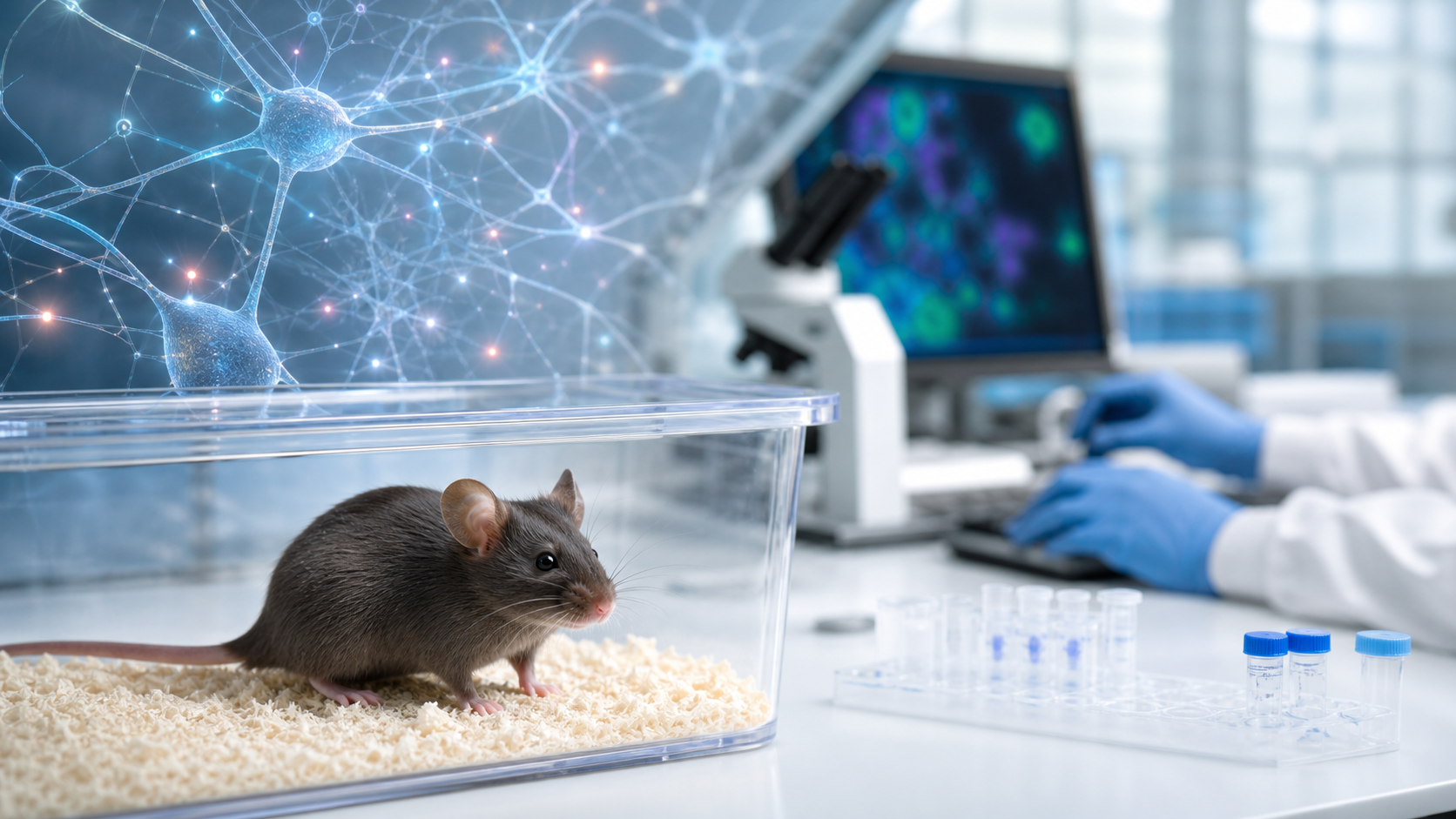
A study led by UCLA Health researchers found that a single dose of rapamycin rapidly and temporarily improved brain-signaling and behavioral differences in adult mice whose mothers experienced immune activation during pregnancy. The work, published in Nature Communications, is preclinical research: it was conducted in mice and does not show that rapamycin is safe or effective as an autism treatment in people.
Researchers used a maternal-inflammation model in which offspring developed persistent brain overactivity, sensory sensitivity, repetitive behaviors and greater seizure susceptibility. UCLA said changes appeared within about two hours after the drug was administered. That speed led the team to examine functional signaling rather than assume that the drug repaired structural differences in the brain.
What the researchers propose
The team reported changes in gene expression associated with ion channels, epilepsy and autism-related biology, particularly in excitatory neurons. Their interpretation is that rapamycin may have temporarily rebalanced neuronal excitability. A rapid behavioral response in an animal model can help scientists identify mechanisms worth studying, but it cannot establish how a complex human condition should be treated.
Why caution is essential
Autism is a diverse neurodevelopmental condition, not a single symptom or laboratory pathway. Mouse behaviors described as “autism-like” are experimental proxies and are not equivalent to the experiences of autistic people. The maternal-immune-activation model represents one research pathway and cannot explain every cause or presentation.
Rapamycin is an immunosuppressive medicine with important clinical uses and potentially serious risks. The UCLA release describes the mouse effect as short-term. No reader should use this study as a reason to seek or change medication without qualified medical care. Human trials would require safety evaluation, dosing research, appropriate outcomes and ethical participation.
What the study contributes
The result challenges the assumption that adult behavioral differences in this particular model are entirely fixed by early structural development. It gives researchers a testable hypothesis about brain excitability and the mTOR pathway. Replication by independent teams, longer follow-up and research in other models will be needed before scientists can judge how broadly the mechanism applies.
The responsible takeaway is narrow but useful: one dose produced a fast, temporary effect in a specific group of laboratory mice. It is a clue for future research, not evidence of a human cure.